Adventures in life and photography out West

Latest

Change in the Canyon

Estes Park sits just on the cusp of a potentially great summer. The economy is finally picking up. While gas prices are rising, it is because people are finally traveling again. Estes Park will see its usual influx of visitors looking for outdoor adventure, and the town will host a world-class professional bicycle race. Estes Park is a destination for people who not just want to get out of their homes, but want to get outside. This is especially true for road cyclists.

 Every year, hundreds, if not thousands of cyclists test themselves on the roads leading into Estes Park, and none more than the Big Thompson Canyon. It is such a popular and iconic climb that it is part of the USA Pro Cycling Challenge this August. The pros will enjoy a rolling road closure, but the average weekend road warrior has a bit more to worry about in the canyon. Something should be done to make the climb safer.

 While cyclists can often match motorists’ speed descending the sinuous road, climbing out of Loveland presents a precarious ride. A pro can maintain 15 miles an hour, which is still very slow by motorist standards. The canyon also has quite a few tight and blind curves, making both cyclists as well as motorists nervous. Some of this will change, just by law, but there are some things that could be done sooner, rather than later.

 Laws passed in this last legislative session require anytime a road is reconstructed, the needs of pedestrians and cyclists must be taken into account. This often means adding shoulders. This is evident in the bridge reconstruction between Estes Park and Drake, where a wide shoulder was added to the bridge. In the long run, the canyon will be safer to ride, by law. In much of the rest of the canyon, however, at the moment, there may still be tight spots.

 “Seventy-four to seventy-six percent of Colorado highways now have shoulders,” reports Dan Grunig, Executive Director of Bicycle Colorado, the state’s leading bicycling advocacy group. “The mountains and foothills are mostly where we’re missing that.”

 In the short term, there are some simple things state and local officials could do to make this corridor safer. To start, roads like US 34 tend to be 24 feet wide, from the white fog line on one side to the other. Grunig points out that this is a pretty wide travel lane. Signage could be placed on the sharp curves warning motorists to keep alert to cyclists. Next, the fog line on the uphill side could be moved inward about two feet, giving cyclists a wider shoulder on the slower side. Finally, chevrons and a cyclist symbol should be painted on the motorist lane, again on the uphill side, to also remind the drivers of the cyclists on the road. The slight narrowing of lanes will also cause drivers to take the curves a bit more slowly, keeping them in their lanes.

 Estes Park is right on the verge of becoming a major destination for cycling tourists. With our climbs, our scenery, restaurants and family-friendly focus, not to mention the upcoming world-wide exposure from the road race. If pressure can be applied to local and state transportation officials, the Big Thompson Canyon and its communities, Drake, Glen Haven, Loveland and Estes Park, can enjoy more cycling traffic. And with the bikes come their billfolds. It would be safer for drivers, safer for cyclists and invite more revenue to Estes Park. 

Full Speed Ahead

It is clearly cycling season, even at altitude. At the middle of May, one grand tour is snaking across Italy, one smaller tour is heading up the state of California and we are four weeks from the start of Ride the Rockies. But wait . . . there’s more.

 The town of Estes Park is gearing up for its moment in the international cycling spotlight. With riders like Cadel Evans from Australia, Peter Sagan from Slovakia, Andy Schleck from Luxembourg and the Garmin-Sharp team from just down the hill in Boulder, it is very much an international event. Fans and reporters from around the world will likely show up, as well. Estes Park, as a whole, needs to get involved to show the world that we are a place to visit.

 Bo Winslow, the town’s Community Services Director, has put out a call for volunteers. The town needs course marshals, idea people to help with related events in town the day of the race, as well as vendors to keep the visitors in Estes with food, gifts and the like. If you think you want to help, contact Bo at 586-6104 or e-mail events@estes.org.

 I have heard there are detractors who point to flopping rock shows as a reason that we should not care. To that I say, the bands who have come for those shows have not been top acts since I was in elementary school in the ’70s. The guys who will be blowing through town on August 24 will be the very best riders on earth right now. These are the best of the best. These guys are faster and fitter than anyone you personally know. These guys competed for medals in the Olympics and will be here preparing for the World Road and Time Trial Championships. In cycling, if you’re not in France in July, it really does not get any better than this.

 To get an idea of what we are in for, tune in to the Amgen Tour of California, going on this week. Folks are lining the race route, especially on the climbs and in towns, two things we have going for us. We will see the end of a race within the race as the last King of the Mountains points will be collected at the top of the Glen Haven switchbacks.

 The one thing we will have that the California race doesn’t is that many people will still be on summer vacation when the Pro Cycling Challenge comes through. And, because it will be a Saturday, and with our proximity to our major population centers, we could see a crowd matched only by the Scot Fest, except they will all funnel into downtown. This is a chance to show a global audience all of what Estes Park has to offer.

 There will be another, slower but no less enthusiastic group pedaling through Estes Park 19 days ahead of the pros. I will be riding the Colorado Rocky Mountain Bike Tour through here on August 4-5. It is the opening day of the ride that loops beginning in Fort Collins and visits EP, Golden, Fraser, Steamboat Springs, Walden and back to Fort Collins. This makes a whole summer of fun for me.

 The CRMBT is like Ride the Rockies, only smaller and tougher. While RTR allows 2,000, or so, riders, CRMBT allows only 500. The rout tends to be more challenging, as well. While the toughest day in the saddle for RTR will be Day 4, when we ride over 10,850 foot Wolf Creek Pass, the third day of the CRMBT starts in Golden, climbs Lookout Mountain, ride to Evergreen to climb Juniper Pass, plunges into Idaho Springs, slogs to the base , then climbs Berthoud Pass before finishing in Fraser. Three big climbs over 85 miles. Riders are even invited to ride the Mount Evans Road, if they feel so motivated.

 Tour director Peter Duffy explains that it is a tour for a more dedicated crowd.

I don’t want to bad mouth the Ride The Rockies,” he hastens to say. “I’ve ridden it, it’s fun. The CRMBT is smaller and tougher. We want to appeal to a more dedicated cyclist. The people who ride CRMBT will be a little fitter and a little more enthusiastic.”

 I start my organized riding season this Saturday with the First Ascent Ride, a fund raiser for Livestrong. It is a metric century, starting and ending in Golden, starting with a climb of the Golden Gate Canyon, a road that pitched up to 14 percent in sections, then follows the Peak to Peak highway before descending Coal Creek Canyon and returning to Golden.

 The ride features several members of the 7-Eleven cycling team, as well. It should be a great morning of riding. If you find your Saturday morning open, check the First Ascent Ride website and head down to Golden early. The ride begins at 7:30.

Have fun, be safe. I’m going riding.

Image

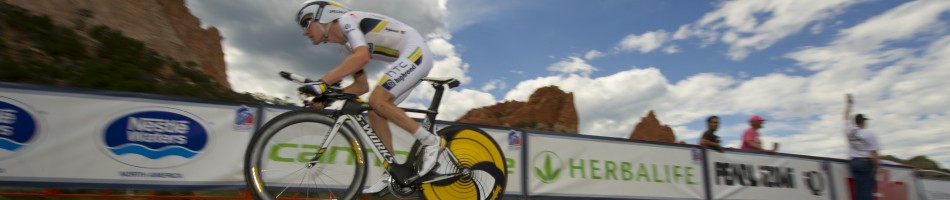
This image is from the USAPCC web site.

Colors of Spring

Back when the great Eddie Merckx won his legendary 525 races, cyclists often rode everything. They rode the Spring Classics, the Grand Tours, the World Championships and the “Tour of the Falling Leaves”. Starting in the late ’90s, this began to change. While Merckx won the Giro five times, the Tour five times, the Vuelta a Espana twice, he even won the Giro d’Italia and Tour de France in the same season more than once. This has not been done since 1998 and not attempted more than a handful of times in the last 15 years. This is not all bad, especially for American cycling fans.


While for nearly a century, pink has been the color of May on the international cycling calendar, yellow and grizzly bear graphics have made their way in. The three-week tour of Italy had been the natural lead-in for the Tour de France, in the era of specialization and growing prominence of France’s big tour, the Tour of California has become a big race for more than Americans. This was helped in no small part by the moving of the race from February to May in 2010 after two abysmal weather years. Since the move, the biggest teams and racers have made the move to the Golden State.


The Tour of California is “only” a one-week race, this year beginning near San Diego on Sunday, May 12, and heading north for the first time, finishing in Santa Rosa on May 19. The Giro d’Italia is a three-week Grand Tour. Three weeks on a bike takes a big physiological toll on a body. It not only trims any extra fat off a racer, it begins a catabolistic process. It breaks down muscle in an attempt to find more energy to move the body on the bike. This is a difficult from which a racer has only five weeks to recover. As the Giro d’Italia is the most important race for and in Italy, the Tour is the biggest prize in all of stage racing. As a result, a shorter stage race has tremendous advantages for teams and racers whose ultimate goals are Tour wins.


So the best sprinter in the world not from the Isle of Man, Peter Sagan, will be back in California this weekend. The Boulder-based Garmin-Sharp team has the honor of defending Giro champion, and some of the Americans are in Italy to help with that defense, Dave Zabriskie, Garmin’s time trial specialist, will lead a strong team in California. Even Belgian hero Tom Boonen had planned to hone his sprinting skills in California before his crash at the Tour of Flanders last month.


The rise in American cycling will feature prominently again this August here in Colorado. While most Spanish-speaking racers will head to the Vuelta a Espana, most racers with a shot at September’s World Road Championship will skip the Vuelta in favor of the shorter, though still challenging Pro Cycling Challenge. Bad for the Vuelta, already the Grand Tour’s redheaded step-child, good for American cycling fans.


Meanwhile at the Corsa Rosa, Katusha’s Italian rider, Luca Paolini, is ensconced in pink. Defending champ, Garmin’s Canadian rider, Ryder Hasjedal, is 34 seconds back, tied on time with Sky’s leader, Bradley Wiggins.


The Manx Missile, Mark Cavendish started the Giro with a sprint win in Naples.


Team Sky was the overwhelming winner in stage two’s team time trial on the island of Ischia. Surprisingly, it was Sky’s firt TTT win in a grand tour. The win put Sky’s Salvatore Puccio, who also happens to be Italy’s national time trial champion, in the pink leader’s jersey.


Hesjedal took off on an attack during stage three, only to be caught and passed by eventual stage winner Paolini.

Stage four saw former Giro champion Danilo DiLuca get swamped by the sprinters teams less than 400 yards short of the finish line of the 153-mile stage in Serra San Bruno. Sprinter Enrico Battaglin took the bunch sprint. Paolini kept the rain-soaked pink jersey.


Stage five, 126 mostly-flat miles from Cosenza to Matera, was marred by a crash inside the last 1000 meters. Sprinter John Degenkolb of Argo-Shimano avoided the crash and made up a huge gap in just about 100 meters to take his first career win in the Italian tour.


Look west this weekend. The Amgen Tour of California will be televised on NBCSports network beginning Sunday. To see the Giro d’Italia, visit Steephill.tv to find a live video feed.


Have fun, be safe. I’m going riding.Image

Progress

I am busily staring at my computer, trying to find a muse. I’ve just cleared off a spot on a shelf above my desk, just to change things up a bit and stand while I type. Ultra-marathon hero Dean Karnazes explained in a recent interview that he stands at his desk, just to be that much more active. He explained he also does push ups, squats and stretches every so often to keep moving. I got all this from a web show called Genetic Potential TV, a collaboration between physical therapist and former world-class paddler Kelly Starrett and CrossFit Endurance guru Brian MacKenzie. Make some time for it and check it out.

 This week marked the end of the Spring Classics. From what I can tell, the riders to watch going into the Grand Tour season are Fabian Cancellara, sprinter Peter Sagan and last year’s Tour champion, Brad Wiggins. Look for them all to be in Italy next week for the start of the Giro d’Italia. More on the Corsa Rosa next week.

 I’m a bit of a tech weenie. I love new gadgets and fun stuff. I loved getting the iPhone from the office, initially, as it gave me the chance to make video while I rode. That didn’t work out quite as planned, so I have my eye on the GoPro Hero3. I’m now awaiting the new Dura Ace group set and Shimano’s light DA C24 carbon/aluminum tubeless wheels. I’ve gone on and on about the technology in the new DA 9000 group set, but haven’t hit on the wheels so much, because tubeless rode wheels are new enough, as a concept, that I have not dealt with them before. The idea, as always with high-end wheels, is to be stiffer and lighter. Another in a long line of evolutionary steps with wheels.

 Long ago, rims were made from wood. They have gone through incarnations of steel, aluminum, carbon fiber, sew-up tubular, clincher and now tubeless. This is all on the road bike side, mind you. The last 25 years have been amazing in the leaps in tech improvements.

 I sent a note to Wayne Stetina asking about the biggest improvements in bike technology that he has seen. He responded with the wheels, but named a bunch of other upgrades, as well.

 Stetina rode the Coors Classic and Red Zinger on steel frames with friction shift levers on the down tube, the tube running from the stem to the pedals. He has seen the move from those old shifters, in which the rider had to feel around for the right gear, to index shifters, which were set up to click when dropping into a gear, to the integrated shifter-break lever system introduced to road cycling by Shimano in 1990. Now, of course, we also have electronic shifting, as well.

 Stetina also mentioned the move from the relatively heavy steel frames to aluminum, titanium and now carbon fiber. Some bike manufacturers have assembled bikes that weigh close to 12 pounds, a far cry from the 20-plus pound bikes ridden in the Tour de France as recently as 1999. Funny thing is, if you have the motivation and the money, you can ride a lighter bike than the pros. The Union Cycliste Internationale has set a weight limit of 15 pounds for pro bikes.

 Imagine riding in wool shorts. With a real lamb-skin chamios. The modern bib shorts with man-made chamios are a huge leap forward in comfort. I own a number of wool jerseys and even a beloved wool trainer. They are soft and warm and don’t hang on to oder. However, I still wear something under them. I can’t imagine wearing wool against my sensitive areas.

 Bike evolution, at least within the pro peloton, will continue without one of my favorite riders. Italian sprinter Alessandro Petacchi announced his retirement this week. The big Italian started racing in 1998, but started making a name for himself in 2003 when, in his first Tour de France, he won four sprint stages. That same year, Ale-Jet also took six Giro d’Italia stages and another five at the Vuelta a Espana. Petacchi holds the record for most stage wins in a single Giro, winning nine sprints in his home tour in 2004. He has the Points jersey from all three grand tours, but his 2007 Giro sprinters jersey was stripped after a blood test revealed he had too much asthma medication in his system. Petacchi actually had a medical exception for it, but officials felt he was’t monitoring his intake well enough and suspended him for most of the ’07 season.

 Petacchi was cut from the same cloth as fellow Italian sprinter Mario Cipollini; tall, good looking, brash, flamboyant, though not nearly as much as Cippo, and not much of a climber. It came as a surprise when, in 2010, Ale-jet made the climbs of the Alps and Pyrenees and road into Paris for the first and only time, to claim the green sprinters jersey of the Tour, something Cipollini never accomplished.

 Ride the Rockies is beginning to loom large in the near future. I am forced to obtain a bike box to get my bike from where I will park in Colorado Springs, out to Telluride. This will be my first experience with disassembling my bike for transport. The up side is that I don’t have to spend $400 on a bike case. I will head over to the Estes Park Mountain Shop and pick up a box that was used to ship bikes to them. This also eliminates the need to schlep the box all the way back to my car in the Springs. I will arrive in Telluride, assemble my bike and find a recycle bin for the box.

 We are six weeks short of Ride the Rockies, by the way. Milage totals are heading up. According to the RTR training chart, we should be up to 60 miles over three rides during the week and another 40 miles in one ride on the weekend. Like many weekend warriors, I have to rejigger this a bit. I can justify counting my morning classes as 15 miles each. That only counts as 45 miles during the week. I have to try to add some of that back in on the weekend. Finally, the weekend weather is supposed to cooperate.

 This week, I plan to spend some time on our local climbs, a nearly endless resource. On Saturday, I have time to warm up around Lake Estes, then head up Fall River Road to the steep Fall River Court. I will ride back into town and over Moccasin to the steep streets on the east side of the Estes Park Medical Center. None of these climbs are very long, but what they lack in duration they more than compensate with intensity.

 On Sunday, I hope to head down to Boulder and catch one of their shop rides. The shops that are sponsoring and supporting the RTR have organized group rides on most weekends. This Sunday, the Sports Garage has a three-hour ride beginning at their shop just about half a block north and west of Pearl and 28th street. They list the start time at 9 a.m. and offer a discount for purchases in their shop for participants.

 If you want a ride down to Boulder on Sunday or interested in the Saturday climbing, shoot me an e-mail or call.
 ImageHave fun, be safe. I’m going riding.

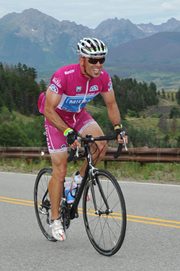
A nice shot by Sundance Images Event Photography of me in my Ale-Jet replica 2007 Giro sprinters kit! obviously, it is early in this climb. I’m still smiling!
 

Fun

Fun.

Fun

Our sport is supposed to be about the fun. Yes, there is suffering. Yes, plenty of cycling involves challenging oneself and being uncomfortable. In the end, however, it is supposed to be about the fu, the pleasure of riding.

I am reading the autobiography of Manx sprinter Mark Cavendish and found a similar conclusion. He describes the suffering of the mountain stages in the grand tours, about the exhaustion of riding for three weeks. He also writes about the disappointment of leaving the Tour early in 2008 and not getting to Paris for the last sprint.

He also had harsh words for the riders ejected from the ’08 Tour for doping. It made me think, why would someone risk health, career and standing for a win. My conclusion was they put something else ahead of the fun.

I don’t mean to judge. Cycling in Europe is akin to prize fighting in the US, or a lot of pro sports. They often attract athletes who feel it the only shot at rise out of dire economic circumstances. If that’s the case, I could see how someone might be lured into doping to get as far from poverty as possible. Some don’t have the luxury that most of us leisure riders have.

I’m not condoning this behavior, either. The reason Cavendish was so animate about the dopers, in this case Riccardo Ricco, Leonardo Piepoli and Stefan Schumacher, When the dopers set there enhanced paces, they threatened guys like Cav’ who is clean and not a climber. The major Tours set a time limit based of the stage winner’s time. Come in after the cut off and you go home. Ricco broke away and won stage nine that year, putting pressure on the sprinters, then Piepoli put in an inhuman ride the next day.

You may have heard of the Autobus, or Grupetto. These are the groups of big men at the back of these climbing stages, generally sprinters working together to make the cutoff. They are not lollygagging. They are suffering just to suffer all over again the next day. When the cheaters put in the crazy-fast rides up the high mountains, they not only take away the chances of the clean climbers, they endanger a great many sprinters. This same sort of event also reenforces the notion that a rider has to dope to win. Luckily, the ’08 Tour also showcased the advances in the doping tests, resulting in the aforementioned ejections.

Fear is a big motivator. Fear motivates a kid from a broken home in a Dallas suburb to cheat, cheat to an unprecedented level, and deny cheating to protect all that was gained by cheating. Fear, in turn, causes corporate sponsors to flee the sport. It causes coverups and improvements in catching the cheaters. I have to count myself as lucky that I never got to ride at a level in which any of this was a consideration. I’m lucky that I can just ride for fun.

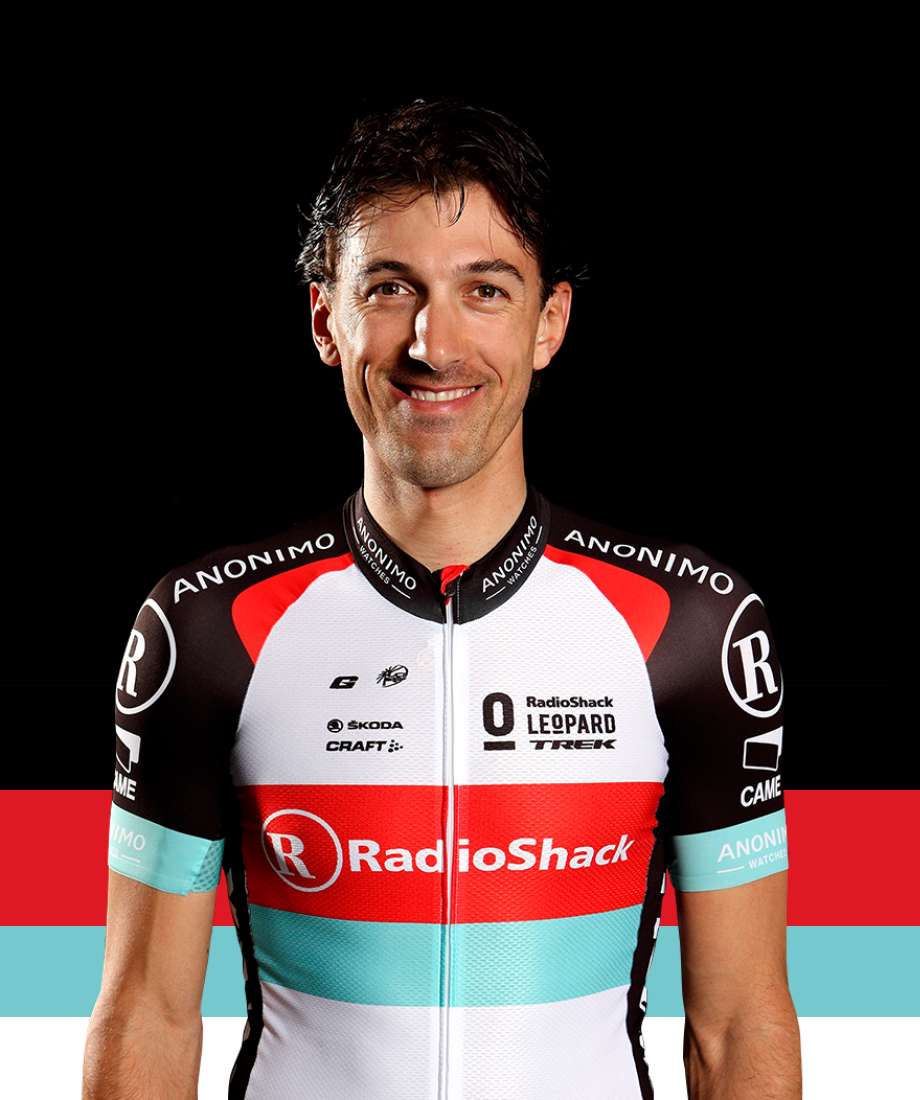
Last weekend was a great example of fun and suffering. The Paris-Roubaix, possibly the monument of Monuments, was won, for the third time, by Swiss RadioShack rider Fabian Cancellara. While everyone predicted his triumph, it was not as predicted. Spartacus did not simply ride away from everyone as he did in the 2011 Paris-Roubaix, or even as he did the weekend before in the Tour of Flanders. He found himself working hard to catch a break in the last half of the race, then dragging a formidable group with him to nearly the end. Bad luck derailed a few, then Cancellara had to out-sprint Belgian hopeful Sep Vanmarcke of the Blanco Pro Racing team on the track in Roubaix.

Cancellara was clearly happy to win his third cobblestone trophy, but he was also clearly spent. The cobbles of the road took a toll on big Fabian, who now looks forward to a break before the summer grand tours start in May.

Many expected Spartacus to have his way with the race on Sunday. Gone was his chief rival, four-time Roubaix winner Tom Boonen. The big Belgian crashed out of the Tour of Flanders a week before. Boonen was hoping to add his name to the short and distinguished list of five-time Paris-Roubaix winners which includes, of course, Eddie Merckx. Tornado Tom now awaits the healing process and the grand tours of summer.

One last Belgian Monument note; On the podium of the Tour of Flanders, Slovak sprinter Peter Sagan was caught in photos grabbing the backside of a podium girl as she was presenting the winner with his trophies. This week, Sagan saw the young lady again. Maya Leye is a 25-year-old who works for Flanders Classics, the organization that promotes and stages the Tour of Flanders. Leye was on the podium with Sagan again on Wednesday, April 10, to present Sagan with his prize for winning the Brabant Arrow race. Sagan presented Leye with his winner’s bouquet and a public apology. Perhaps the swaggering Slovak learned a little tact out of the who incident.

I plan to continue having fun. It’s a challenge with the late-season snow. I have ridden outside perhaps three times this year, once on the course on which I race this Saturday. I have to remember that it’s about the fun. It does not really matter how well I place. It matters that I am able to push myself. It matters that I get to compete. This won’t determine a paycheck. It won’t change the course of my life. It’s just for the fun of it.

Have fun, be safe. I’m going racing.

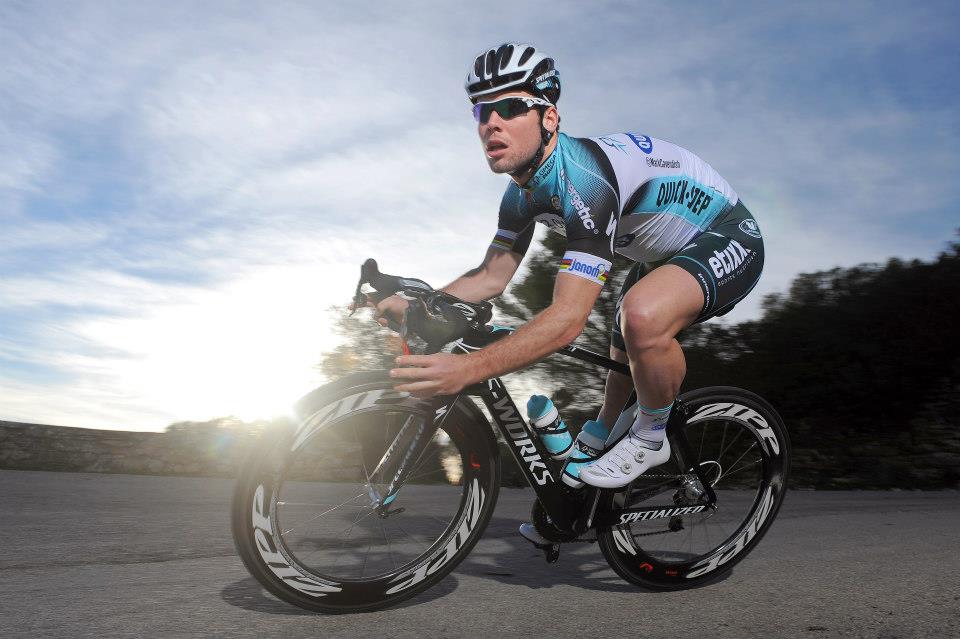
BTW, the photo was taken by Tom de Waele for Omega Pharma/Quick Step

Image

Peter and Spartacus

If last week’s Tour of Flanders is any indication, there are only two riders contending for cobbled wins this season: Fabian Cancellara and Peter Sagan.

The two have traded off winning the northern classics this season. Sagan won his first spring classic by just riding away from Tom Boonen and Mark Cavendish at Ghent-Wevelgem a few weeks back. He took a sprint at the Three Days of De Panne and wheelied across the finish line. The only rider able to tame the 23-year-old Slovak champion is Spartacus.

Fabian Cancellara beat Sagan and the rest of the field at the the E3 Harelbeke two weeks ago. Many cycling writers were excited about the showdown with Spartacus, Peter the Great and Belgium’s Tom Boonen. The showdown fizzled a bit.

Last year at the Tour of Flanders, Cancellara hit a wayward water bottle and crashed in the race’s feed zone, resulting in a broken collarbone. This season, Tornado Tom crashed out, leaving Fabulous Fabian to run free. Cancellara hit the Oude Kwaremont, a climb averaging 4 percent, but kicking up to 11 percent at 17 km from the finish, and rode away from all but Sagan. Cancellara hit the gas again on the last rise, the Paterberg, leaving Sagan gasping and all others far behind, taking the race by better than a minute.

With Sagan skipping Paris-Roubaix and Boonen on the mend, Cancellara is nearly a prohibitive favorite to win his third “Hell of the North”.

The bikes used on these Cobbled Classics have become a hot commodity. The Specialized Roubaix, with its Zerts inserts and comfortable geometry has been a favorite for casual riders for nearly a decade. My bike is the 2004 version, and the newer editions are quite common on organized rides around the state.

The tag line for this bike is a comfortable bike is a fast bike, and the Roubaix is the best, though not the only, example of this. The idea of a comfortable race bike, an endurance road bike, one that is light, nimble and still able to soak up road noise, has become so popular among recreational riders with a taste for speed that several manufacturers have jumped on the band wagon.

Trek made the bike that Cancellara powered to the Ronde win on Sunday. The Trek Domane is the Waterloo, Wisconsin manufacturer’s answer to it’s California rival. The Domain 4.0 can be had for just over $2,000, comes with the relatively inexpensive Shimano Tiagra compact (50-34) gearing. Like any of the bikes at the entry level, it will weigh between 17-19 pounds.

The Giant Defy Composite 3 weighs just a whisker over 18 pounds and sports the same components as the Trek. Giant is an Asian manufacturer with the reputation of building plenty of frames with different labels. They know what they are doing with carbon frames. They make a whole lot of them, so their entry-level Defy will set you back a mere $1,700.

Swiss manufacturer BMC took a different tack, returning to the nearly-forgotten material of aluminum for their Granfondo GF02 bike. The $1,899 bike comes with Shimano 105 compact components, one step up from the Tiagra group. The frame is based on the carbon version that American Tyler Phinney is riding around the cobbles this season. It tips the scale at 19.1 pounds and shares much of the vibration-eating geometry of its much pricier carbon iterations.

The entry level carbon Specialized Roubaix, the Sport Compact, comes with Shimano 105 compact components and weighs around 18 pounds. It comes with their four-position adjustable stem and, because it is the bike that started the trend, gobbles the cobbles. It tends to be smooth and fast, though if you have the means and tend to be a weight-weenie, you may want to shell out a bit more than the $2,100 MSRP of this model.

We now sit eight weeks from the start of Ride the Rockies. The total milage for next week should come to 80 miles, 30 for the weekend ride and three more rides during the week totaling 50 miles. If you haven’t started already, it’s about time to insert some climbing, some short sprints and most definitely a group ride into your training. I will actually have a taper this week as I have a real race, the Haystack Mountain Time Trial, on April 13. I might not get all of the miles in, but I will get some intensity in.

If you find yourself short on time, there is at least one thing I can suggest . . . intervals. On a relatively short ride, after a 15-20 minute warmup, take a few hard digs, close to your maximum effort, for no more than a minute. Take a good recovery interval and repeat at least four time. The toughest and most effective interval workout I know of is the dreaded Tabata Protocol. After a good 20-25 minute warmup, set a timer for four minutes. In those four short little minutes, go as hard as you can for 20 seconds and recover for just 10. This is as hard as it gets, but yields the most benefit in a very short period. Give it a try if you feel you need to train but only have half an hour. Better get a bucket . . .

Have fun, be safe. I’m going riding.

Image

Video

Best Coin Ever Spent

Flash mob in Spain

Joy

I was sitting around the office, daydreaming about our upcoming
spring break trip, reading e-mails for upcoming rides, reading about
the Cannibal showing signs of his age, he’s had a pacemaker put in,
when a friend posted a video on Facebook that changed my day. The
video was entitled “The best coin ever spent” and start in Spain with
a little girl putting a coin into the hat of what seems to be an
extremely talented and well dressed classical base player. As the
video goes on, musicians stream out of a door in what I assume is the
bank sponsoring the video, along with some well-placed and
inconspicuous choral vocalists in the crowd. The all come together to
perform Beethoven’s final movement of the 9th Symphony, or “Ode to
Joy.”

The tone of the music and voices brings an exuberant
smile to faces in the video and to mine. I love this piece. I
regularly soften the suffering in my indoor training class with it. I
hum it to myself while climbing. It is the musical incarnation of my
Happy Place.

Climbing is challenging. That’s just the nature of
it. If it were easy, everyone would do it. We’d have bike lanes on
Trail Ridge Road. Climbing shows us what we can be, what we are
capable of, how hard we can push ourselves. It is a psychological
exercise as much as physical. Sometimes I have to play games in my
head to get through.

I think I’m just used to TRR by now. The
climb from either side does not seem as difficult to me as
Independence Pass. I was certainly humming for that climb. I also pick
out land marks. This is an old trick. When really tired, or really
challenged by the terrain, pick out a landmark. In your head, imagine
throwing a rope around it like a pulley, and drag yourself to it. When
you reach it, pick out another and keep going. 

Once on the Elephant Rock metric century, I had to help a buddy by telling him, “Okay, just ride to that tree. Okay, now ride to that big rock. Okay now just get over the top.” Painful and obvious, but effective.

Between the humming and the mind games, I can’t help
but smile. This is good. Smiling has a measurable positive effect on
performance. Smiling, whether you mean it or not, sets up a positive
cycle in the endocrine system. The positive feeling associated with
smile sends even more endorphins into the blood stream, taking a bit
more of the edge off of the pain. Even telling yourself that you enjoy
climbing, just another mind game, will start this virtuous cycle into
motion.

Pain is inevitable. Suffering is optional.

This weekend marks the start of the Spring Classics season. The Ronde van Vlaanderen, or Tour of Flanders, is Sunday and should be a showdown between Swiss superman Fabian Cancellara, Belgium’s favorite son, Tom Boonen, and Slovak up-start Peter Sagan. Boonen has had a rough go so far this season. He fell behind on training after narrowly catching an infection in his elbow before it got to the bone. This could have cost him the arm. Boonen bonked horribly while trying to chase down Cancellara in last week’s E3 Harelbeke semi-classic. Spartacus attacked exactly where everyone knew he would, but no one could do anything about it.

Relative youngster Sagan won last weekend’s
Ghent-Wevelgem with such a lead that he had time to pop a wheelie
while crossing the finish line. This sets up what could be the best
race that won’t be televised in the US this year.

NBC has shown no hint that they will broadcast this Monument, forcing guys like me to find a feed online. My suggestion is a web site called steephill.tv. They will find a feed, though it may require the scaling of a paywall. I think this year, it will be worth it. At this point, we will be adding another ten miles to the weekly total heading

toward Ride the Rockies. This is added to the weekend ride, which is
beginning to resemble a real spring ride. This week, as of Saturday,
we should ride 30 miles, then distribute another 50 miles over three
days. Nine weeks left, I’m getting excited.Again, if you feel the need
to ride, say Sunday, shoot me an e-mail.

Have fun, be safe. I’m
going riding.

We Fall

Sometimes, it doesn’t matter how much you know or how hard you train. Mistakes happen. Mistakes happen with the experts, the people at the very spearhead of their professions. It takes just a split second or one bad decision or just dumb luck. We are lucky if we get to learn from this.

In 1967, on stage 13 of the Tour de France, the rider who was then the very best ever to come out of Great Britain, Tom Simpson, collapsed and died during an ascent of Mont Ventoux. He was 29. He had made the decision to take an amphetamine and alcohol, with or without the knowledge of the combinations diuretic effect. In the heat of the climb, Simpson began cramping, but by the time he stopped, it was too late.

Fabio Casartelli was an Italian cyclist riding for Motorola in 1995. He was the defending Olympic road race champion. He had won stages in several major and minor stage races. On July 18, stage 15 of the Tour, Casartelli and several other riders crashed on the descent of the Col de Portet d’Aspet in the Pyrenees. Casartelli’s head hit a rock on the side of the road the serves as a guard rail and died. He was just shy of 25. The next day, the entire peloton road behind Motorola, as they led the stage start to finish. Lance Armstrong won the following stage in a long breakaway, dedicating the win to his fallen friend. Every time the Tour passed the memorial for the rest of the Texan’s career, he payed homage.

Wouter Weylandt was young and improving. The Belgian was riding for the premier team from his country, Quick Step, with several stage wins and some impressive placings within the stage races. In 2011, Weylandt was riding for Trek/Leopard on the descent of the Passo Bocco during stage 3 of that year’s Giro d’Italia. He was near the end of the stage, but trailing off the back of the main peloton, as sprinters often do on climbing stages. He was trying to bridge up while on a switchback section. While checking behind him, over his right shoulder, to see who might join him, he clipped the guard rail on his left. He was thrown over and landed on the road below. Weylandt was 26 when he died. His girlfriend, An-Sophie, was pregnant with the couple’s daughter, born September 1, named Alizee.

Why am I going on about this? It’s more than the recent climbing tragedy in the national park. Things happen. We enjoy a different sort of inherently dangerous sport. Things can go horribly wrong in a fraction of a second. That is the nature of cycling. The best way we can ensure maximum survivability is to wear a helmet.

Pay attention. Don’t take silly risks. Most of us do not get payed for our cycling results. We have families who want to see us come home. Know the traffic. Assume that the driver either doesn’t see you or doesn’t care. And again, wear a helmet.

Carry some kind of ID. I carry my drivers license, my insurance card and my Road ID. If you crash and can’t communicate, you want whoever finds you to be able to tell your loved-ones whats going on.

Don’t let love of the sport interfere with family. No one ever gets to the end of this life and says, “I wish I’d spent less time with my family.”

Next time you head out, be sure to kiss your spouse. Hug your kids. Make sure everyone you care for knows how you feel. Things happen and you don’t want to leave something like that hanging.

For training, we are now 11 weeks away from the Ride the Rockies. Our total miles should be up to 70 with three rides equalling 50 miles during the week and one more of 20 mile on the weekend. Keep it up. As we are expecting snow and cold all the way through the weekend, the typical spring pattern, I’ll be inside again. It may also be an opportunity to do some maintenance on the bike, or maybe just stay home and watch movies with my wife and daughter.

I’m not just saying this. I mean it. Have fun, be safe. I’m going to hang out with my family. 

Image